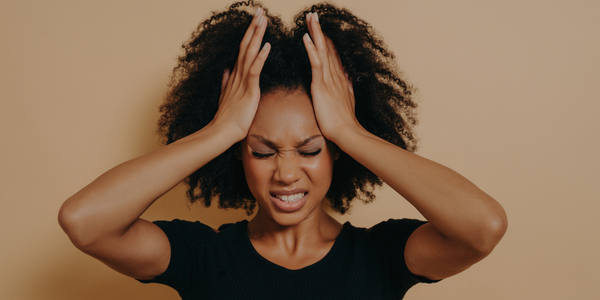
If you’ve ever had one of those mornings where your hair just wouldn’t cooperate — the curls won’t define, your scalp feels tight, and your confidence tanks before you even leave the house — you already know: hair isn’t just hair.
For many of us with curly and textured hair, our hair plays a big role in how we see ourselves, how we move through the world, and even how we show up emotionally. There’s real science and lived experience behind that connection.
The Emotional Weight of Textured Hair
According to a 2023 Dove study, 53% of Black women feel their hair has held them back professionally, and 80% change their natural texture or style to fit societal expectations. That’s not vanity — that’s emotional labor.
We spend years learning to “manage” our curls, often internalizing that our natural texture is something to fix instead of something to understand. Add in unrealistic beauty standards, lack of education in salons, and the constant cycle of trial and error, and the relationship between hair and mental health becomes clear.
It’s exhausting to pour time, money, and energy into something that feels like it’s still “not enough.” Over time, that frustration turns into anxiety, low self-esteem, or even avoidance — skipping events, not wanting to be seen, or hiding behind protective styles that no longer feel protective.
The Science Behind the Connection
Researchers from the International Journal of Trichology and Frontiers in Psychology have found that hair dissatisfaction is directly tied to decreased self-confidence and increased social anxiety — especially among women of color.
The findings suggest what we already know: when your hair feels cared for, you feel more like yourself.
It’s not about perfection. It’s about peace.
The mental release of finally having products that work — that keep moisture in, soothe the scalp, and don’t trigger irritation — goes deeper than aesthetics. It’s about safety, routine, and control in a world that often tells us to conform.
The Importance of Safe, Effective Products
Here’s the hard truth:
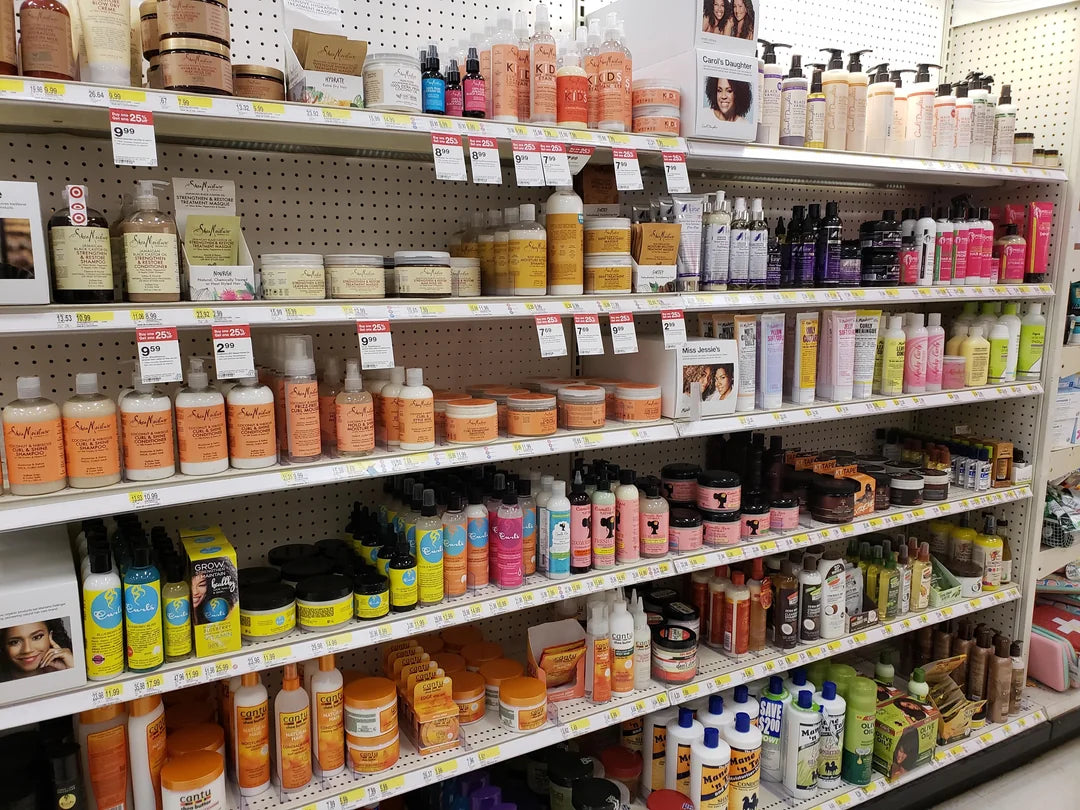
Many hair products marketed to textured-haired consumers still contain endocrine-disrupting chemicals, formaldehyde-releasing preservatives, and synthetic fragrances linked to hormone imbalance.
A 2022 Harvard School of Public Health report found that Black women are exposed to more hazardous hair ingredients than any other demographic. These exposures have been connected to reproductive health issues, fibroids, and even certain cancers.
When we talk about self-care, this is what we mean: the products we use shouldn’t make us sick.
Clean, plant-based formulations aren’t just a luxury — they’re protection.
Hair Care as Self-Care
Your wash day isn’t just maintenance — it’s mindfulness.
Taking the time to massage your scalp, breathe in clean ingredients, and hydrate your curls is a physical act of self-love. It’s a ritual of slowing down, resetting, and showing up for yourself again.
When we approach hair care as part of our emotional wellness routine, it transforms everything:
-
It stops being about control and starts being about connection.
-
It stops being about appearance and starts being about identity.
-
It stops being about managing and starts being about healing.
Where Angelic Organics Fits In
That’s exactly why I started Angelic Organics — because I was tired of products that looked beautiful on shelves but did nothing for my scalp or soul.
We handcraft each formula with safe, plant-based ingredients that are gentle on the body and powerful on the hair — because your crown deserves care, not compromise.
If you’re in a season of wanting to rebuild your relationship with your hair — to feel connected, confident, and calm again — start small. Start with something clean. Start with something that feels like love.
Because when your hair thrives, your mind does too. 💛
Further Reading & Sources:
-
Dove CROWN Research Study, 2023
-
Harvard School of Public Health, Environmental Exposure & Black Women’s Hair Care, 2022
-
International Journal of Trichology – Hair Satisfaction and Psychological Health, 2021
-
Frontiers in Psychology – Hair Identity and Self-Esteem, 2020